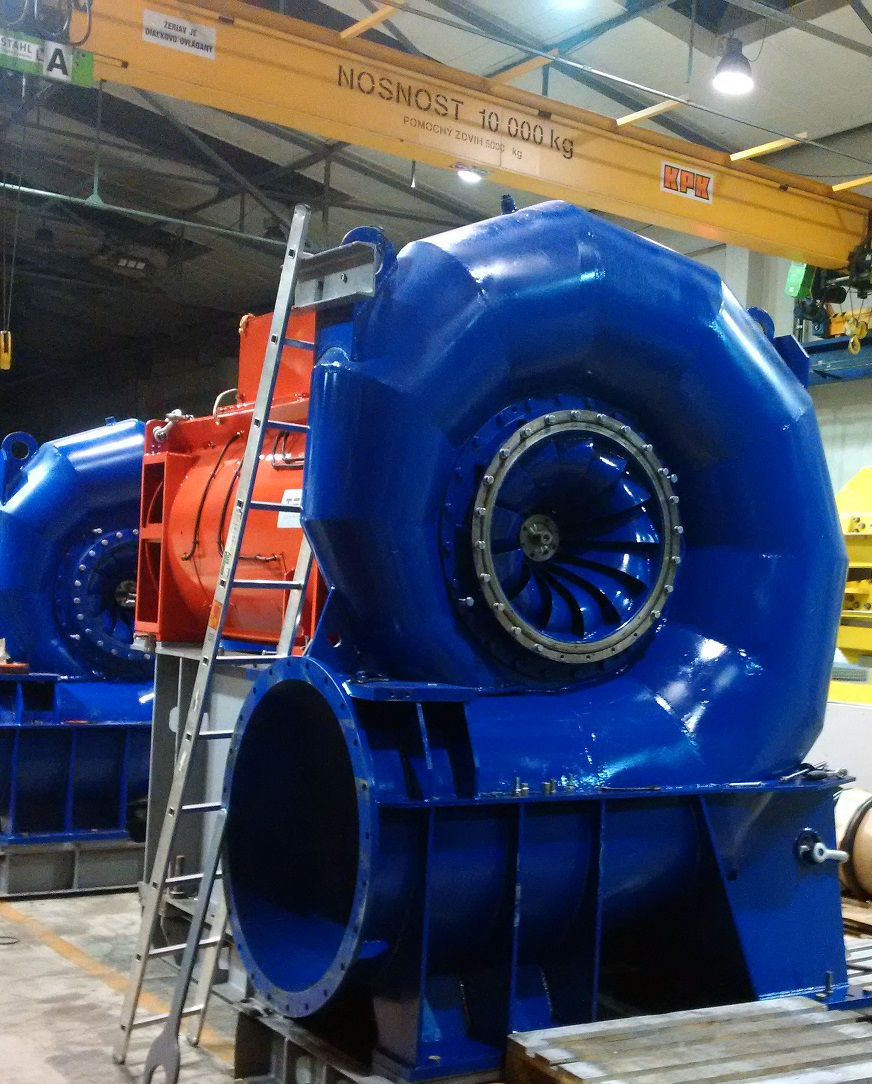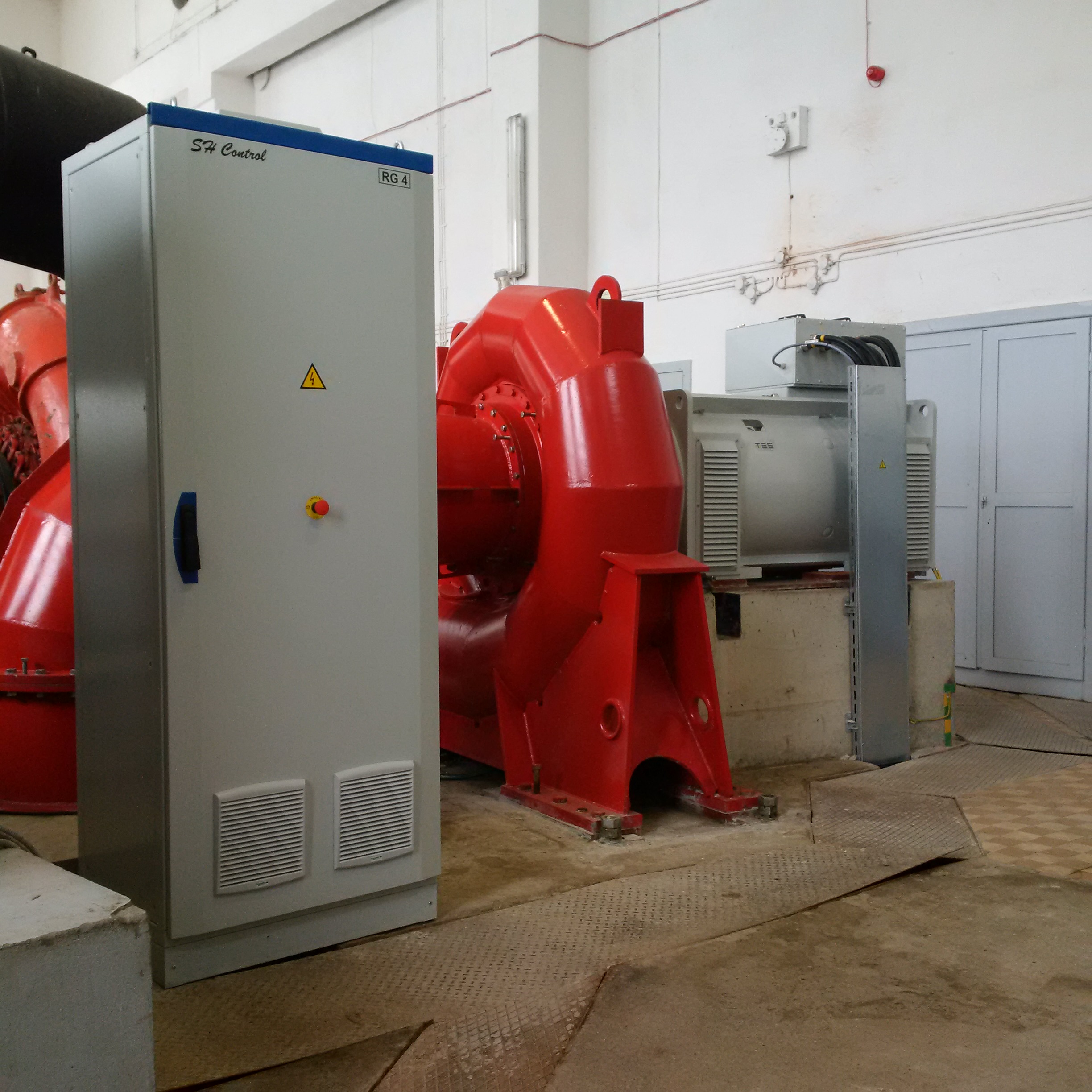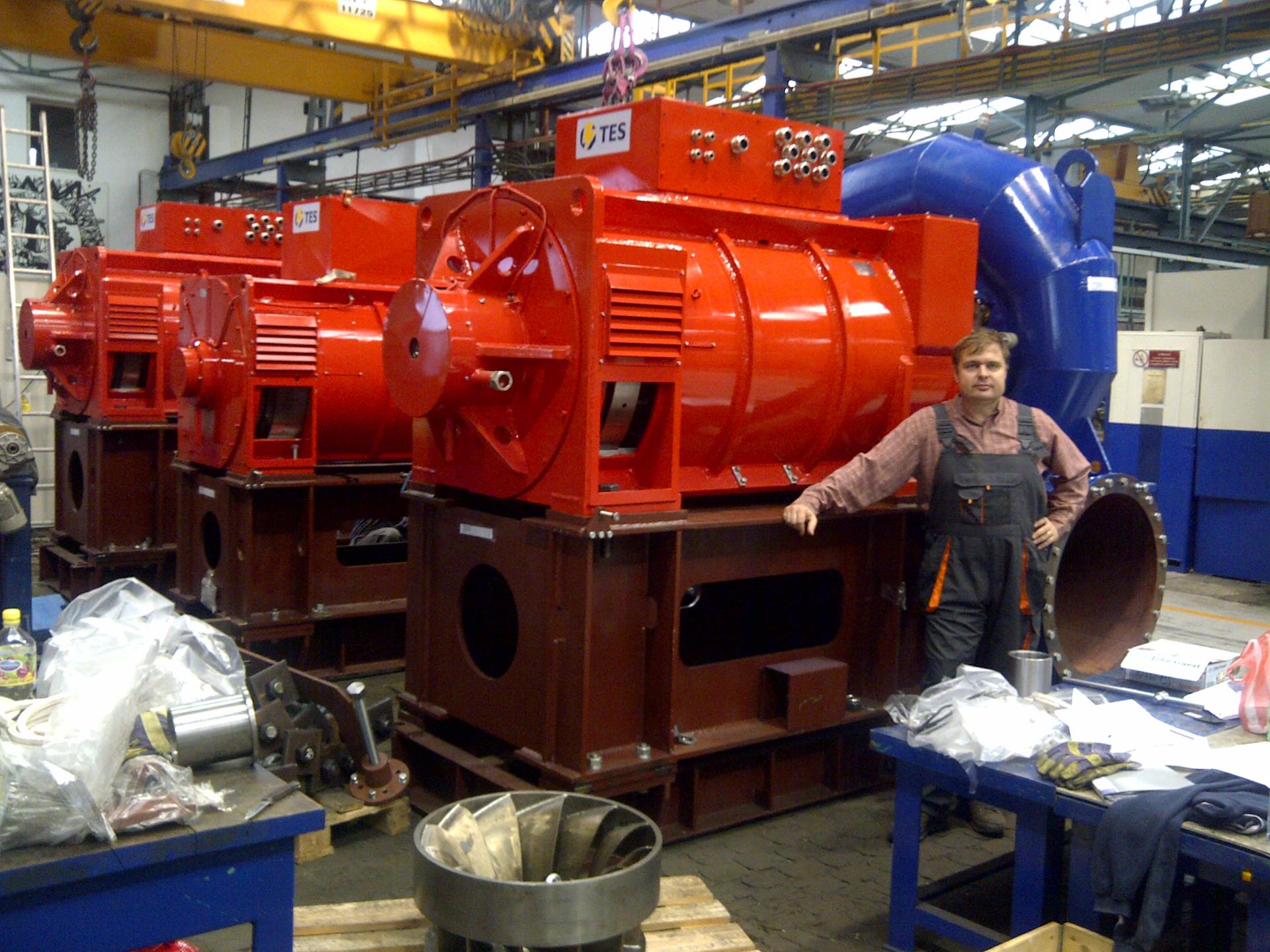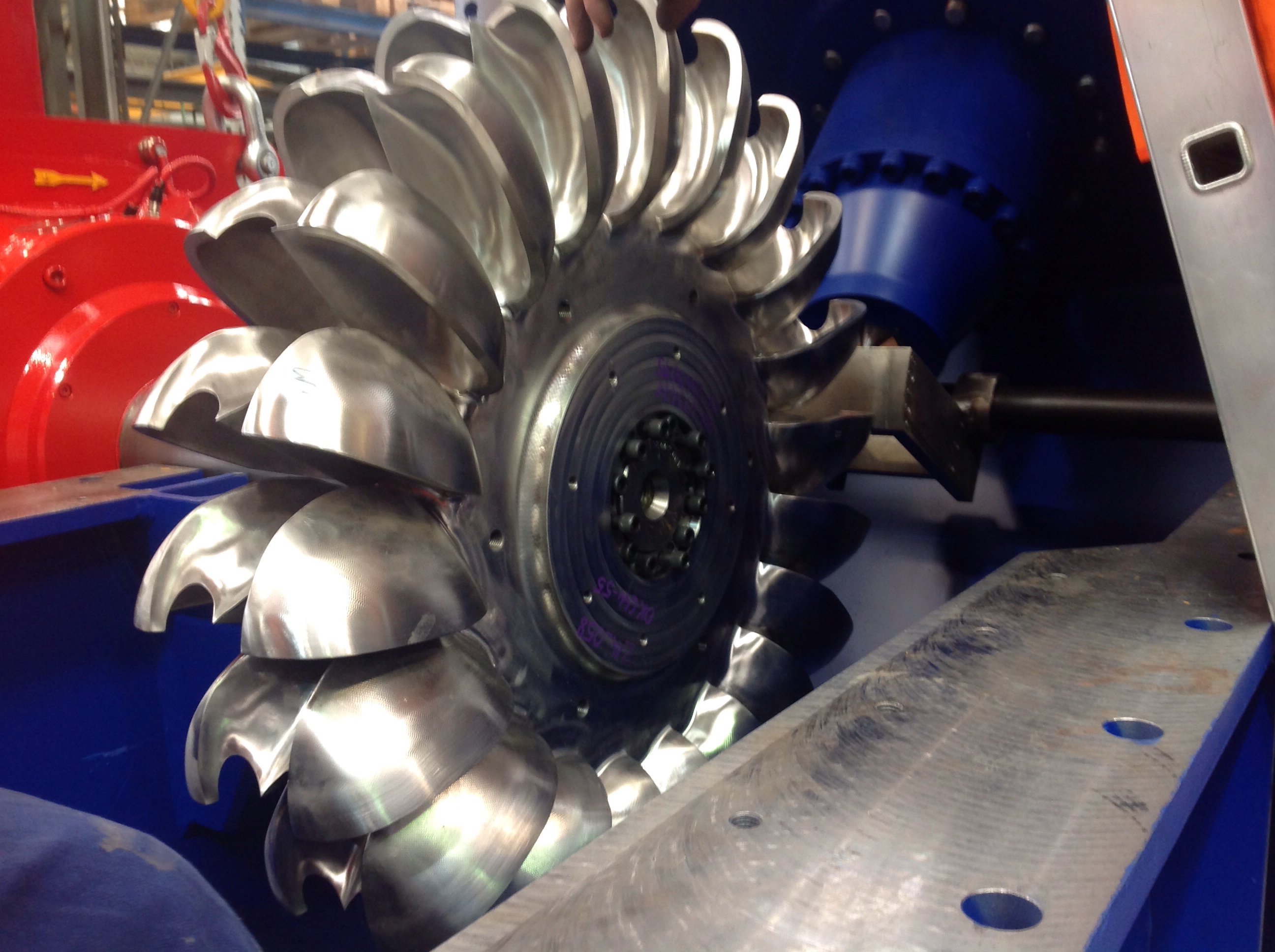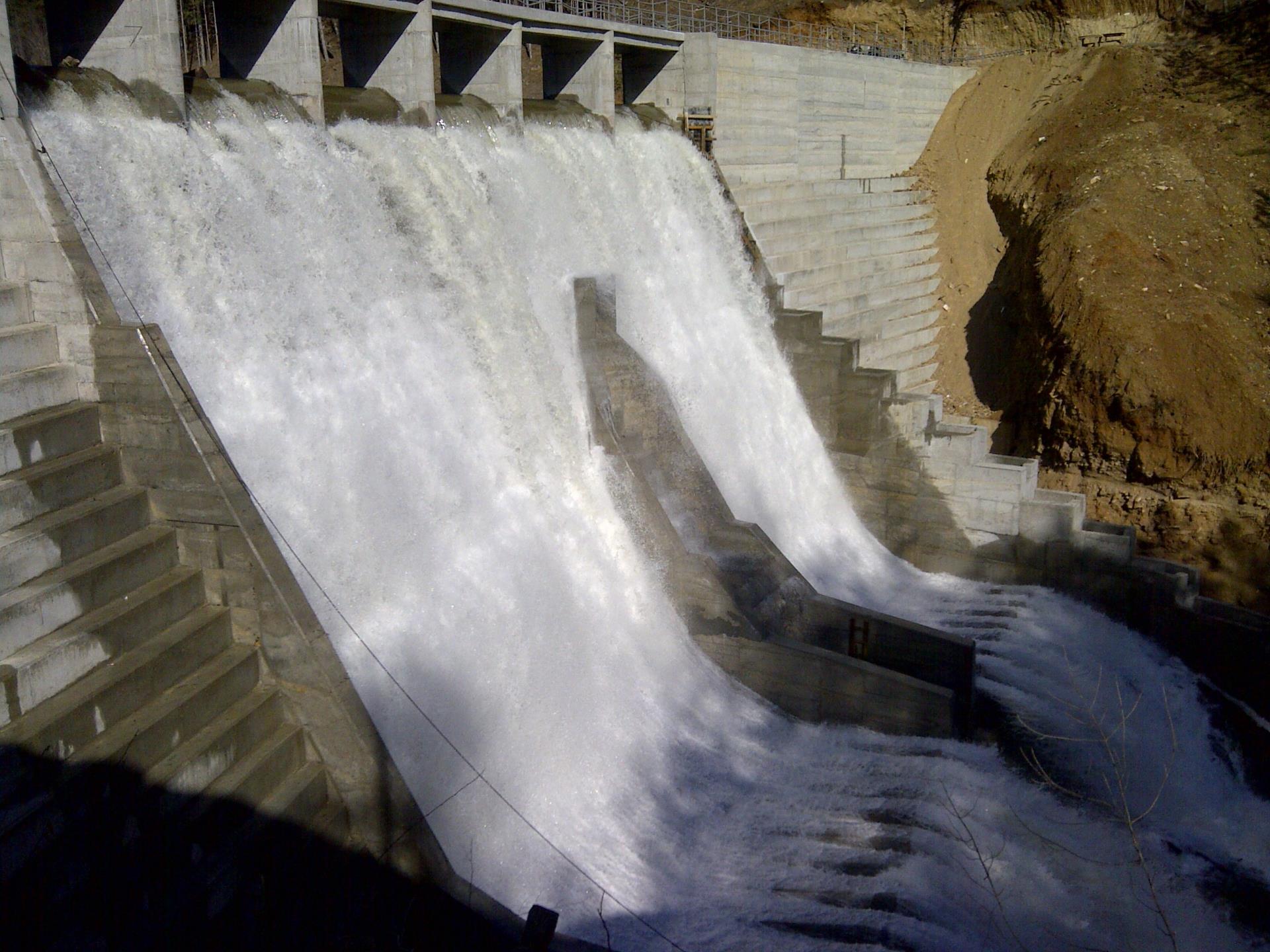
Our services for small hydropower plant equipment include:
- complete turnkey solutions
- partial turnkey solutions (complete electrical systems)
- supply of individual components (electrical protection devices, control systems, electrical parameter measuring instruments and other equipment for controlling small hydropower plants)
Functional specification of the small hydropower plant control system
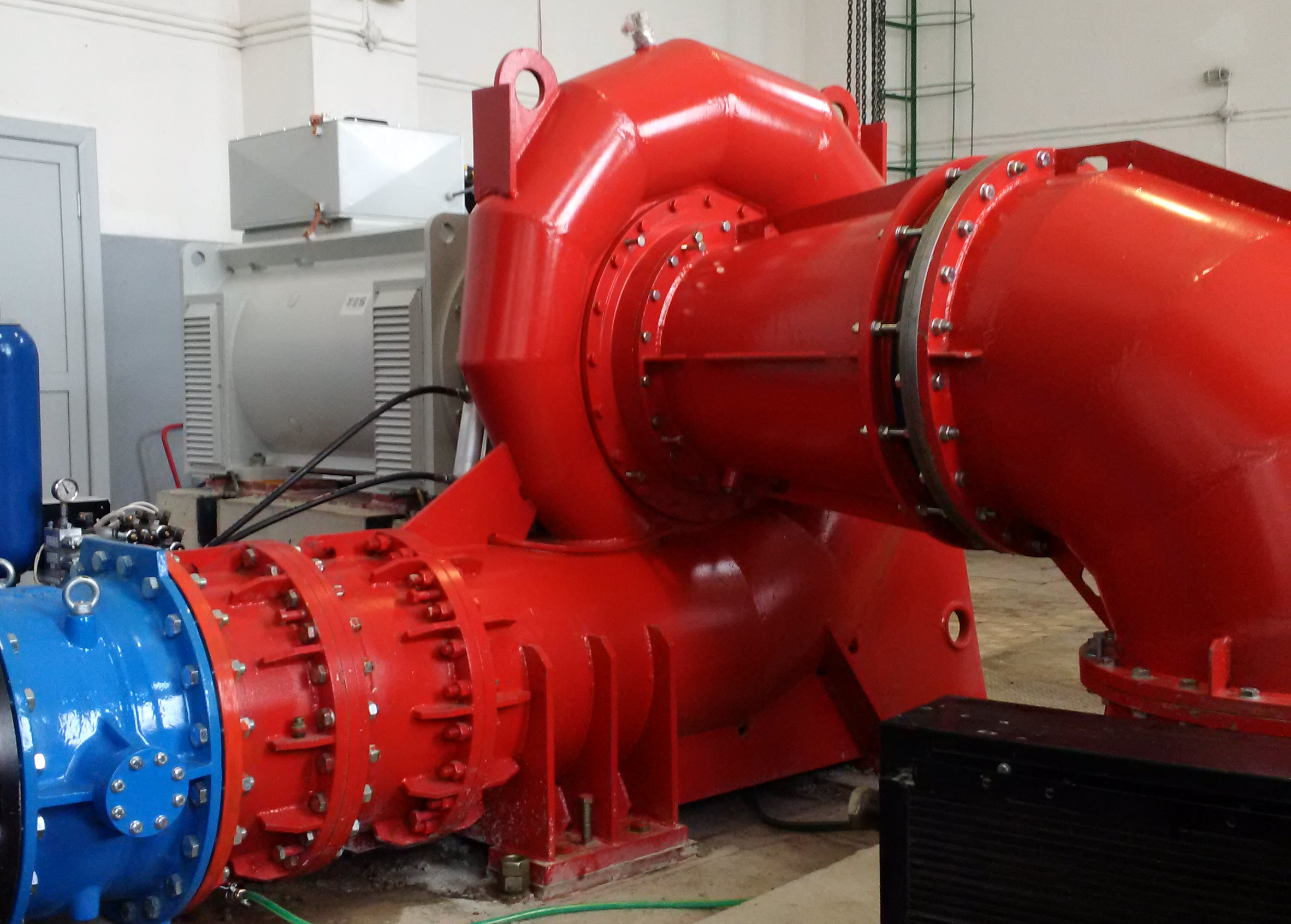
Number of turbines, generator type and operating mode
- one turbine, induction generator, operation in parallel with the grid
- one turbine, synchronous generator, operation in parallel with the grid and islanded operation
- two turbines, induction generators, operation in parallel with the grid
- two turbines, synchronous generators, operation in parallel with the grid and islanded operation
- 3 or more turbines, induction generators, operation in parallel with the grid
- 3 or more turbines, synchronous generators, operation in parallel with the grid and islanded operation
Automatic control
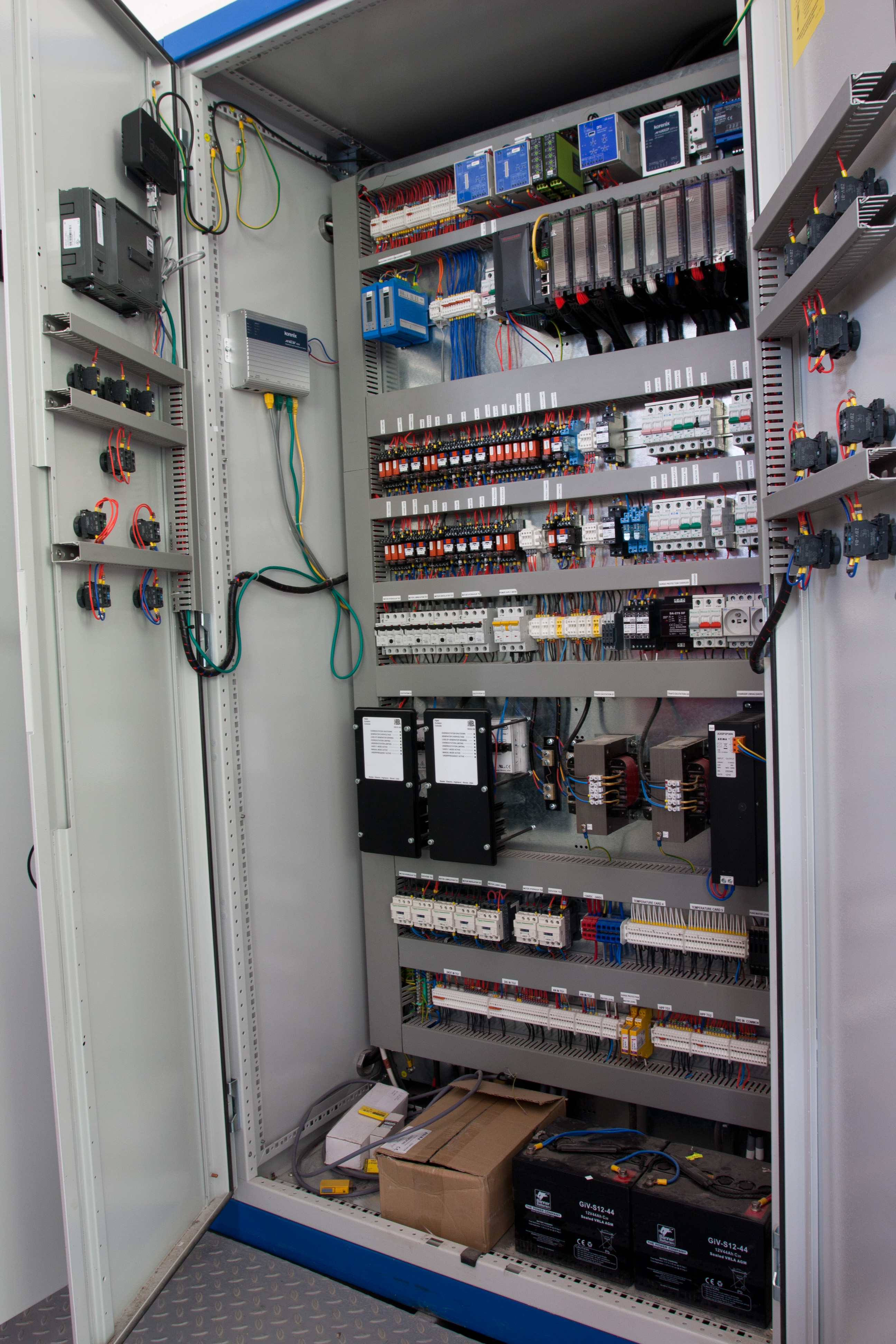
Operation of the generating unit is fully automated. The control concept is designed to make optimal use of the watercourse's hydropower potential while minimizing operating and maintenance requirements. The generating unit is controlled by a programmable logic controller from HONEYWELL, UNITRONICS or SIEMENS, depending on the customer's requirements and the complexity of the application.
The microprocessor control system ensures automatic operation of the small hydropower plant with occasional operator supervision, optimizing operation according to the required power output and water level. It provides the following functions:
- automatic connection of an induction generator to the grid once rated speed is reached
- automatic generator synchronization
- disconnection of generators from the grid and turbine shutdown in the event of an equipment or grid fault
- automatic turbine restart with restoration of its previous settings once the fault has cleared
- parameter-based generator output control — adjustment of turbine opening according to water level
- coordinated turbine control
- display of operating conditions (power output, water level, temperatures, etc.) and fault conditions on the control system's graphical display
- logging and storage of operating data (power output and water level; approximately 14 days)
- logging and storage of fault events (99 records)
- communication with a supervisory PC and dispatch center via ETHERNET
- communication with operators via GSM messages
Protection system
To ensure safe plant operation, the control system works in conjunction with a protection system covering:
- frequency protection
- overvoltage protection
- reverse power protection
- current unbalance protection
- overcurrent protection
- differential protection
- thermal protection of bearings and windings
- vibration measurement
Water-level and power control
Provided sufficient water is available, individual turbines can maintain constant power output. However, the control system's primary objective is to maintain the maximum plant output permitted by the available water flow. This is achieved through water-level control and optimization.
In run-of-river plants with limited water storage, one turbine always regulates the water level. The others operate in follower control according to their required power setpoints. The water level is maintained just below the weir crest.
For dams with substantial water storage, proportional power control is used, with the required output of each generating unit proportional to the water level.
Frequency control in an islanded grid
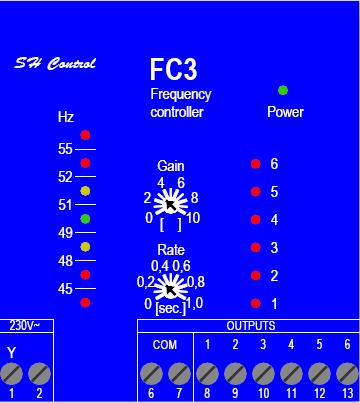
The frequency of an islanded grid depends on the balance between the output of its generating sources and the power drawn by its loads. A rapid change in load while generating output remains constant causes the frequency to change. Frequency can be maintained within permissible limits by rapidly adjusting either the load or the generating output. For physical reasons, a rapid change in generating output is usually not possible. The only way to change the load rapidly is to use an electronic flywheel. With suitable parameter settings, the electronic flywheel can maintain reserve power within a range of 0–110% of the generating source's output. Using an electronic flywheel significantly improves the stability of the islanded grid and extends the service life of water turbine control equipment.
Optimization of turbine operation
Where a small hydropower plant has two or more turbines (usually two), an optimization function is used to maximize electricity generation at a given flow rate. This is achieved by optimally distributing power output between the turbines through adjustment of their openings so that they operate at maximum efficiency. Compared with conventional water-level control, optimization increases annual energy generation by a further 10 to 15 percent.
Trash-rack cleaning control
Trash-rack cleaning control depends on the specific design of the cleaning machine and the number of water-level measurement points, and is generally tailored to each plant. Cleaning is triggered by the difference in water level upstream and downstream of the trash rack, the time between cleaning cycles, or a combination of both. Control is implemented either in a PLC shared by the generating unit and the cleaning machine, or in a dedicated PLC.
The delivery also includes a local control cabinet for manually operating the individual arms of the cleaning machine and the hydraulic power unit.
Control options
The method of control depends on the control system used and the customer's requirements.
- Local control from the control cabinet
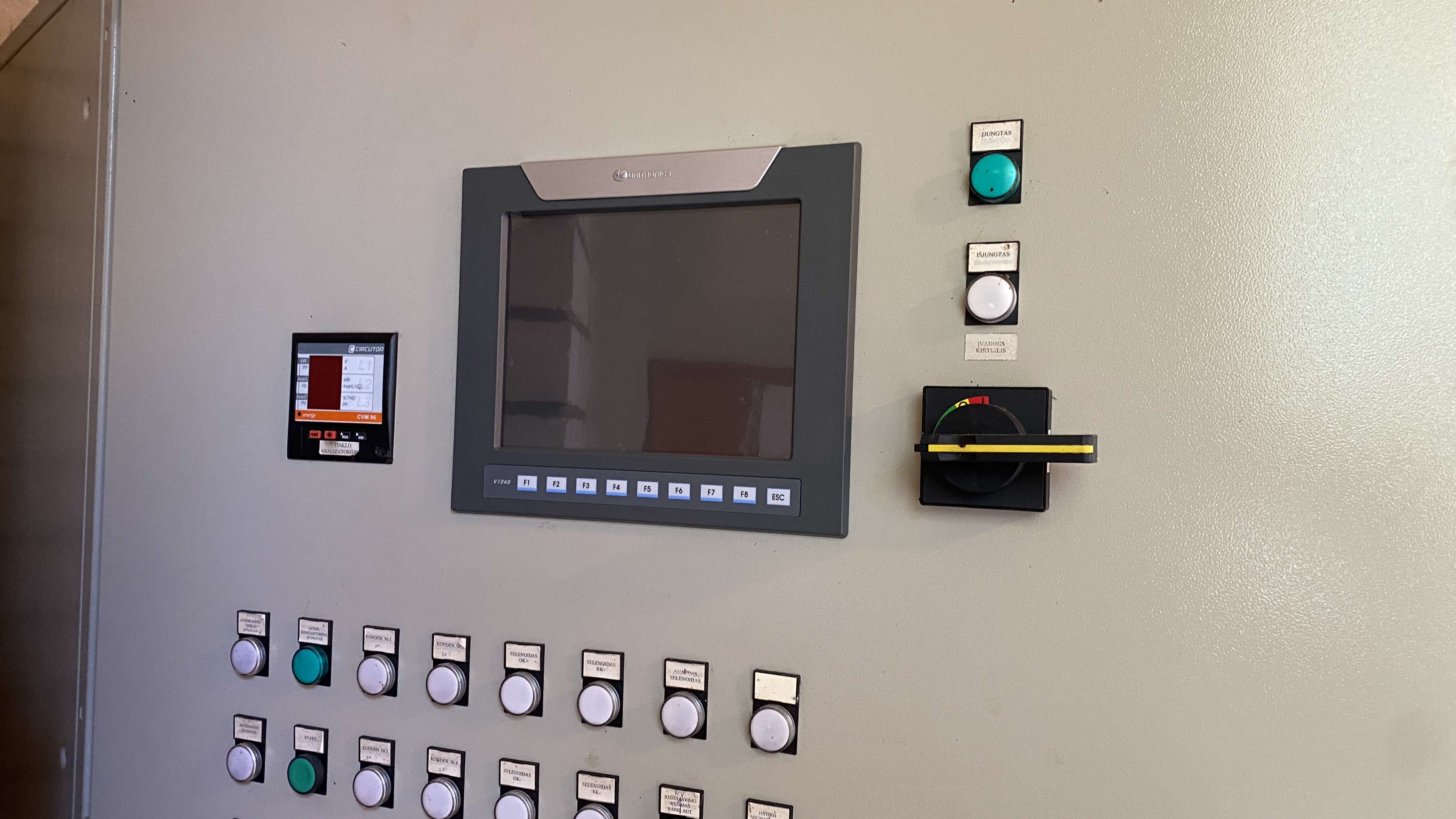
The controls are built directly into the cabinet and can be operated using pushbuttons or a graphical touchscreen.
- Local control from the operator's control room
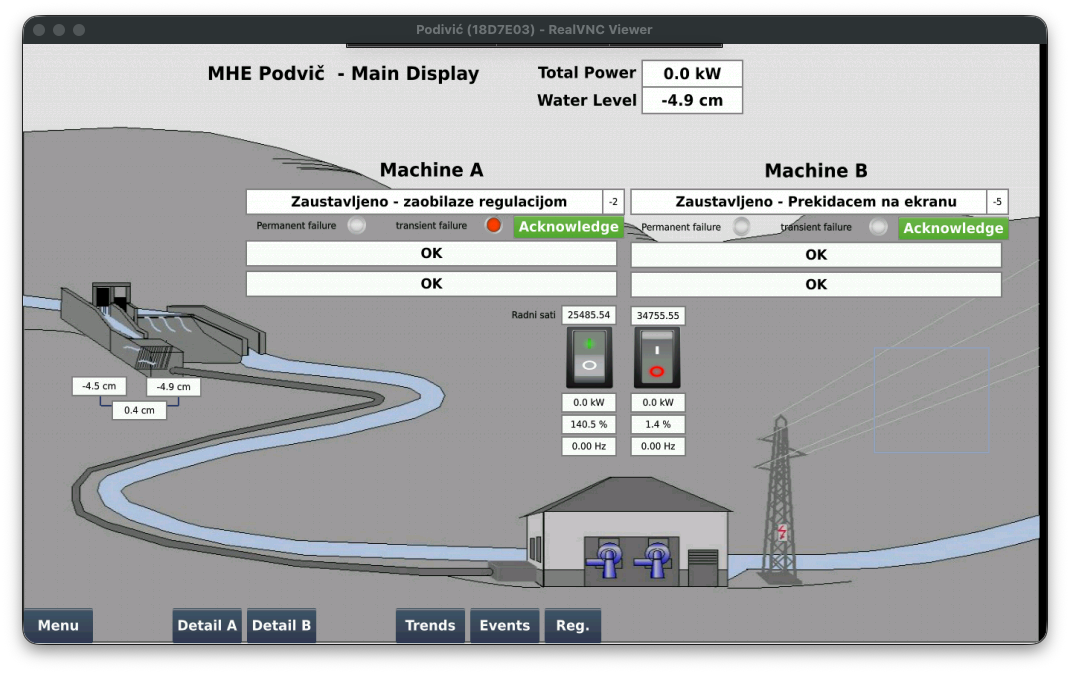
The operator's control station may be located anywhere from a few meters to several hundred meters from the control cabinet. The connection is provided by a serial link, copper Ethernet cable, fiber-optic cable or wireless Wi-Fi connection.
We normally use a PC with an LCD display running a SCADA system, typically providing the following screens: Plant Overview, Generating Unit Details, Parameter Settings, Alarm Overview and Trends for Key Variables.
- Remote control via the internet or GSM communications
Remote control can be provided from any distance from the plant in two ways.
The first option is a connection over a mobile network. Where mobile network coverage is available at the plant, this solution provides the following functions:
- monitoring and controlling the generating unit using SCADA screens
- obtaining information and issuing commands using a mobile phone and SMS messages
In the event of an alarm, the control system sends an SMS describing the alarm to selected phone numbers. The user is informed of the fault almost immediately and can take appropriate action.
The second option is an internet connection, which requires an ADSL line or a similar connection at the plant. This provides access to the control system and allows it to be operated using the TCP/IP protocol.
Hardware implementation
The control system can be implemented using various hardware platforms. Our most frequently used solution to date is the SHC controller, which was designed specifically for this purpose and has been deployed in several dozen applications. In addition to this controller, we have extensive experience with UNITRONICS Vision and SIEMENS SIMATIC S7-200 systems for smaller applications, and Honeywell HC 900 PLCs for larger applications.
Local and remote control can be provided using any PC running our own SCADA software.